The International Coalition to End Torture documents torture and ill-treatment, monitors how states apply the Convention against Torture, and publishes source-based research for the people affected and for those who represent them.
Featured InvestigationThird-Country Removal Is a Pretext for Refoulement. The United States Is Sending People Its Judges Protected Back to Torture and Persecution Through Transit Countries in Africa and Latin America.
People US immigration judges protected from return are being flown to third countries that send them home or hold them until they go. Courts, sworn declarations, the receiving governments and…
The rule this site exists to document
“No State Party shall expel, return (‘refouler’) or extradite a person to another State where there are substantial grounds for believing that he would be in danger of being subjected to torture.”
United Nations Convention against Torture and Other Cruel, Inhuman or Degrading Treatment or Punishment, article 3(1)
The same prohibition in national law
Refoulement is the treaty’s word, from the French refouler, for returning a person to a place of danger. None of the three statutes below uses it. Each sets out the same prohibition in its own words.
United States
“It shall be the policy of the United States not to expel, extradite, or otherwise effect the involuntary return of any person to a country in which there are substantial grounds for believing the person would be in danger of being subjected to torture, regardless of whether the person is physically present in the United States.”
Foreign Affairs Reform and Restructuring Act of 1998, section 2242(a)United Kingdom
“It is unlawful for a public authority to act in a way which is incompatible with a Convention right.”
Human Rights Act 1998, section 6(1). Article 3 of the European Convention, which prohibits torture and inhuman or degrading treatment, is set out in Schedule 1 to that Act.Germany
“Foreigners may not be deported to a state where they face serious harm as referred to in section 4 (1) of the Asylum Act.”
Residence Act (Aufenthaltsgesetz), section 60(2). Section 4(1) of the Asylum Act defines serious harm to include torture or inhuman or degrading treatment or punishment.Read these in full, with the decisions that have applied them
What this site holds
- 126 court decisions, each one with the court’s own document attached
- 52 states carrying an Alert, listed further down this page, each naming the sources it rests on
- The text of the laws all of it rests on, in full, with the decisions that applied them
Start here
Pick the one that describes you.
- I was deported To a country that is not my own. Where to get help
- My relative was deported I do not know where they were taken. How to find them
- I am a lawyer I am advising or representing someone. Decisions and country material
- My organization wants to help A congregation, a nonprofit, a community group. What you can actually do
- I am a journalist I am reporting on third-country removals. The record, with its sources
- I work in government I hold office or advise someone who does. What the obligation is
Every route names its sources and says plainly what the Coalition can and cannot do. None of it is legal advice.
Alert
Reported risks of torture or refoulement in states receiving people transferred from the United States. Each designation names the sources it rests on. What an Alert means
52 statesLatest News
All reports →
He Reported for More Than Twenty Years. A Federal Appeals Court Says ICE Broke Its Own Rules When It Took Him Back.
October 24, 2026
Supreme Court Pauses the Third-Country Ruling and Will Hear the Case on 9 December
October 3, 2026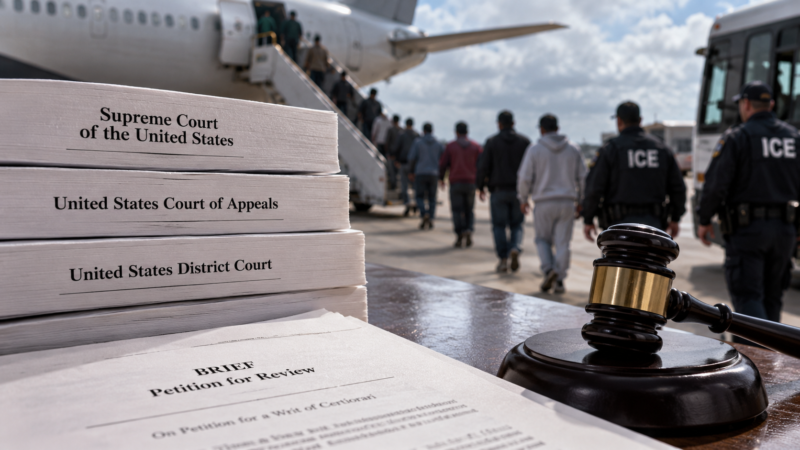
What United States Courts Have Held on Removal to a Third Country, and What They Have Not
October 3, 2026
Liberia Agreed in September 2025. Liberians Were Told in August 2026.
September 16, 2026How We Work
Know It.
We raise awareness of the UN Convention Against Torture and international human rights law among governments, institutions, and citizens. Knowing the law is the foundation of demanding it.
Demand It.
We lobby the United Nations, national parliaments, and regional bodies to ratify and implement OPCAT and anti-torture obligations. Pressure from coalitions changes legislation and practice.
Defend It.
We train detention monitors, support national preventive mechanisms, and protect human rights defenders. Without independent oversight, prohibitions against torture exist only on paper.